What Are Flock Cameras And Why Are They So Controversial?

- Privacy advocates warn the scale of the ALPR system is unprecedented, with over 120,000 cameras nationwide tracking innocent drivers.
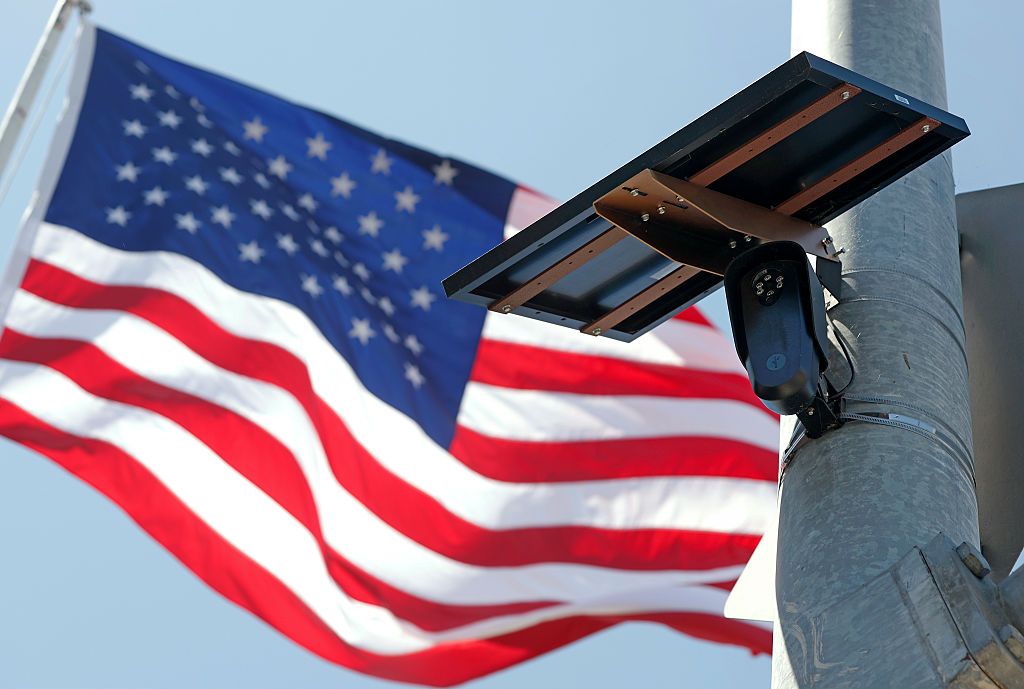
Automatic license plate reader (ALPR) companies like Flock Safety are rapidly expanding their surveillance networks across the United States, raising concerns among privacy advocates who warn that the technology is creating a nationwide system capable of tracking millions of drivers. So, what are Flock cameras and why are they controversial right now?
What are Flock cameras? Why are they controversial?
If Flock cameras are installed in your community, they may be recording your vehicle every time you pass by. Those scans can include your license plate, your vehicle’s make, model, color, and other identifying details, with the information stored in a searchable database that can be accessed by participating law enforcement agencies.
According to Business Insider, Flock maintains that its system is designed with privacy protections in place.
“Flock says its license plate readers do not use facial recognition and that customers — meaning the ones putting up the cameras, not the ones being monitored — can control access to and sharing of the data collected,” the outlet noted.
However, Flock’s cameras are far more advanced than traditional traffic cameras. Rather than simply monitoring traffic flow, the company’s automated license plate readers (ALPRs) capture detailed information about every passing vehicle, including license plates, make, model, color, and unique identifying features such as bumper stickers or visible damage. That information is then uploaded into a searchable database used by law enforcement agencies that contract with Flock Safety.
Privacy advocates argue that the scale of the system is unprecedented.
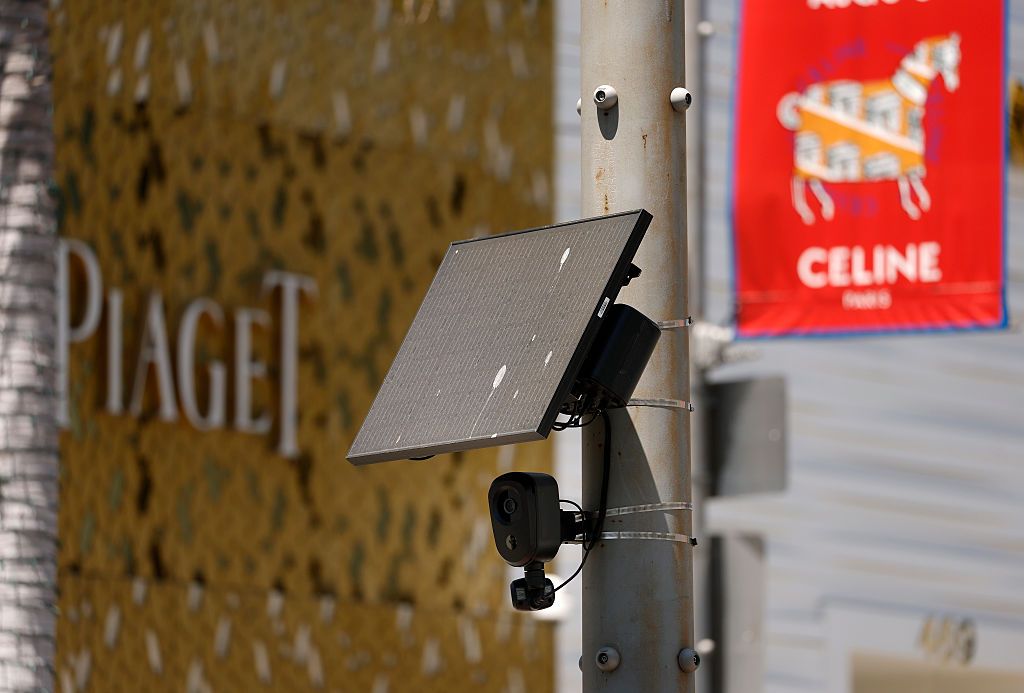
According to the ACLU, around 120,000 Flock cameras are currently installed across the United States, including highways, neighborhoods, shopping centers, and rural communities. Less than 1% of vehicles scanned by ALPR systems are connected to any reported crime and 1 in 10 license plates scanned by Flock readers reportedly misread state identification.
Critics argue that this means the overwhelming majority of the data collected belongs to ordinary people who are not suspected of any wrongdoing. The ACLU has also warned that ALPR technology can create long-term records of innocent people’s movements while allowing law enforcement to search historical travel data with relatively little oversight. Notably, Flock isn’t the only company making these high-tech cameras.
“Flock provides one of the most widely used ALPR systems, but they aren’t the only company trying to make a buck by spying on us. Axon, Vigilant Solutions (a subsidiary of Motorola Solutions), Genetec, PlateSmart, Innova Systems, Rekor, ELSAG, Perceptics, and Jenoptik are a few of the other leading companies selling ALPRs to police, private companies, and others,” the ACLU noted.
Privacy advocates have raised several concerns about the use of automated license plate reader (ALPR) systems. One major issue is the lack of warrant requirements, as police can search historical vehicle movement data without first obtaining a warrant or demonstrating probable cause. Another concern is the tracking of innocent drivers, since the vast majority of scanned vehicles are not connected to criminal activity, resulting in the continued growth of databases containing ordinary people’s travel histories.
Critics are also concerned about data sharing, as vehicle information may be exchanged among local, state, federal, or out-of-state agencies, including for immigration enforcement or investigations related to reproductive healthcare. Finally, questions remain about oversight and security, with privacy advocates arguing that stronger safeguards may be needed to prevent misuse, unauthorized access, or data breaches.
The debate over Flock cameras continues to play out in communities across the country.
Communities across the nation are showing strong opposition to the cameras. Earlier this month, residents in Utah pushed back against the installation of new Flock cameras in their area. According to an Aug. 5 report from ABC4, the Garfield County Sheriff’s Office installed eight Flock Safety cameras at strategic locations along U.S. Highway 89, State Route 143, and State Route 12. Within weeks, one of the cameras had reportedly been vandalized. Following the incident, the sheriff’s office released a public statement explaining why the cameras had been installed and responding to concerns about privacy.
“These cameras are intended to assist law enforcement in protecting our communities, solving crimes, and locating missing or endangered persons.”
The department also condemned the destruction of the equipment while encouraging residents to discuss their concerns directly with officials.
“While we understand that the use of this technology has generated discussion and differing opinions, intentionally damaging or destroying public property is a criminal offense. We encourage anyone with questions or concerns to contact our office so we can have an open and productive conversation.”
The Garfield County Sheriff’s Office stressed that the cameras do not record continuous video. Instead, they capture still images of passing vehicles and automatically identify information such as license plates, make, model, color, and other distinguishing characteristics.
The agency also stated:
“The system is not used for traffic enforcement or to continuously monitor the movements of law-abiding citizens.”
Officials added that searches of the database must be tied to a legitimate law enforcement purpose and documented with a valid case number or incident report.
Dallas authorities revealed this week that 25 Flock cameras had been vandalized or removed across the city since March, according to NBCDFW. More than 650 Flock cameras have been installed throughout the area this year.
In Connecticut, state Senate Majority Leader Bob Duff, a Democrat from Norwalk, and state Sen. James Maroney, a Democrat from Milford, have asked the state’s Department of Emergency Services and Public Protection to conduct a statewide survey identifying the number and locations of license plate reader cameras in every municipality.
Their request follows growing public opposition to the technology, as residents across Connecticut have been voicing concerns and protesting the installation of license plate readers at town hall meetings, Duff told CT Insider on Wednesday.
“We are seeing just a proliferation of these cameras and the public growing more and more concerned about their privacy,” Duff said. “The public anger about being tracked every second of every day is real.”
As the number of ALPR cameras continues to grow nationwide, the debate remains sharply divided. Supporters argue the technology helps solve crimes, recover stolen vehicles, and locate missing people. Opponents contend that creating permanent databases of millions of innocent drivers’ movements poses significant privacy and civil liberties concerns that deserve stronger oversight and public accountability.
Which side are you on?
SEE MORE:
What The Flock? Cops Use AI Camera System To Stalk Their Exes And More
6 Things To Know About The Alleged Kappa Alpha Psi Fraternity Hazing Incident
What Are Flock Cameras And Why Are They So Controversial? was originally published on newsone.com


