Federal Judge Strikes Down Trump’s Mail-In Voting EO
Federal Judge Strikes Down Trump’s Mail-In Voting Exective Order

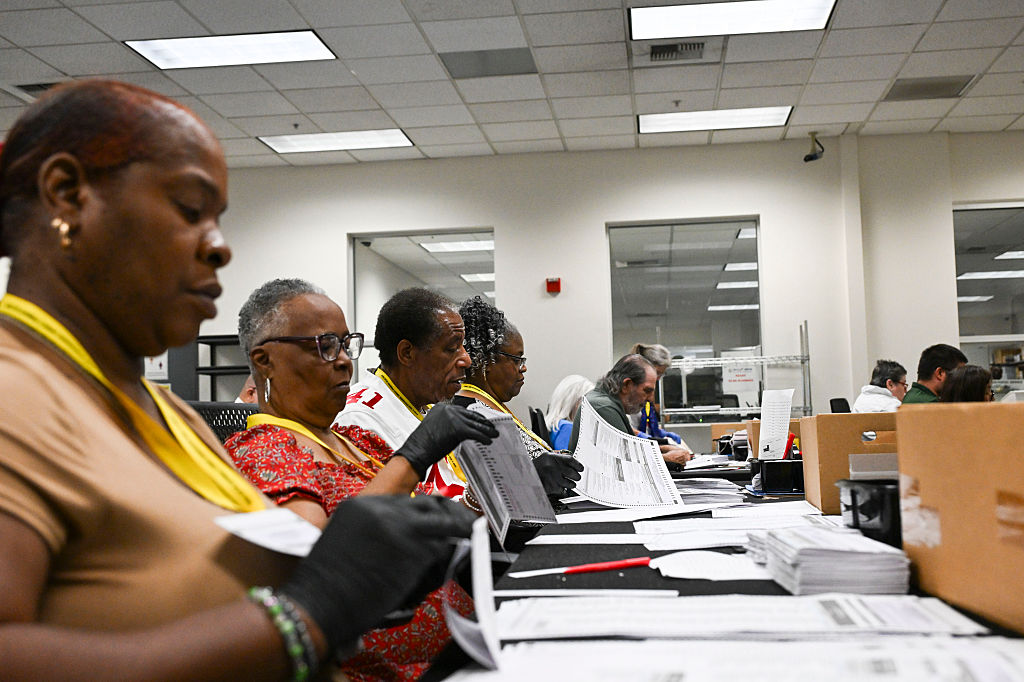
Ever since his loss in the 2020 election, President Donald Trump has held a grudge against mail-in voting. A major priority for Trump during his second term has been trying to ban mail-in voting and federalize elections, even going so far as to issue an executive order that imposed significant restrictions on mail-in voting. On Thursday, a federal judge in Massachusetts struck down key parts of that executive order.
The New York Times reports that Judge Indira Talwani’s ruling called the executive order’s restrictions on mail-in voting “unlawful, null, and void.” Talwani’s ruling also doubled as a history lesson, reminding Trump what the Constitution says about voting and who controls it.
“The Constitution does not grant the President any specific powers over elections,” Talwani wrote, underlining the words “does not” for emphasis. “The Constitution reserves the power to determine voter eligibility to the States alone.”
The lawsuit was brought forth by 20 Democratic attorneys general whose states were impacted by the executive order. A separate lawsuit was filed in Washington, D.C., where a judge initially refused to block it because no specific harm had yet resulted from the order.
Talwani disagreed with that assertion, arguing that the changes the order made to mail-in voting have already placed a financial and logistical burden on the states involved in the Massachusetts lawsuit.
“Not only are Plaintiff States experiencing injury now with respect to planning, but it is undisputed that, should the E.O.’s directives go into effect, Plaintiff States will incur compliance costs,” Talwani wrote.
One of the stranger aspects of the executive is the control it gave the United States Postal Service in overseeing mail-in voting. Earlier this week, Postmaster General David Steiner said the USPS would implement a rule next month requiring postal workers to review mail-in ballots using a list of eligible voters sent by the federal government. Steiner added that USPS would refuse to deliver mail-in ballots in states where the governor refused to submit sensitive voter data to the federal government.
Talwani addressed that rule, pointing out that, believe it or not, the post office doesn’t have the power to implement rules that impact elections. “No law enacted by Congress delegates authority to control mail-in voting to U.S.P.S.,” Talwani wrote, adding that the service “lacks statutory authorization to promulgate any binding regulations on mail-in voting.”
White House Spokeswoman Abigail Jackson released a statement defending the executive order’s legality and added that the administration was “confident that we will ultimately prevail” in executing the executive order. “President Trump is committed to ensuring that Americans have full confidence in the administration of our elections,” Jackson said.
This is yet another blow in Trump’s war against mail-in voting. He is so obsessed with the issue that he is willing to derail progress on a bipartisan housing bill, which is an easy dub for Republicans ahead of what is likely to be a challenging midterm election, to pass the SAVE America Act. A bill that Trump has repeatedly been told doesn’t have enough votes to pass by leaders in his own party.
So while this ruling is, by all means, a good thing, I’m incredibly doubtful that Trump is going to take the L and keep it pushing.
SEE ALSO:
New Postal Service Rule Would Withhold Mail-In Ballots
Supreme Court Weighs Grace Period Restriction On Mail-In Voting
President Trump Refuses To Sign Bills Until SAVE America Act Passes
Donald Trump Pushes Again To End Mail-In Voting After Putin Meeting
Federal Judge Strikes Down Trump’s Mail-In Voting Exective Order was originally published on newsone.com


