Growing Out Relaxed Hair? Here's Everything You Need To Know
Transition With Ease: Ursula Stephens Gives The 4-1-1 On Growing Out Your Relaxed Hair

- Expect some breakage and loss as natural texture grows in alongside relaxed hair.
- Detangle in sections using a wide-tooth comb to avoid unnecessary breakage.
- Protective styles like braids, weaves, and wigs can help manage two textures.
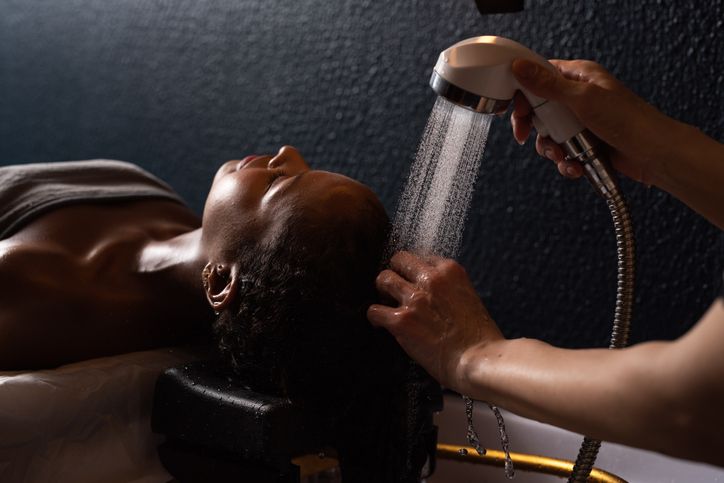
So, you’ve decided to leave the creamy crack behind? You’re not alone! Naturally, the decision comes with a whiplash of emotions—from feelings of empowerment and pride to fear of the unknown. When it comes to transitioning, many people are split between the big chop or cutting relaxed ends over time. That said, many choose the latter to retain length and to prepare themselves for how to manage their new texture. And with so much information out there, it’s easy to be misguided. So, it’s time to learn how to navigate growing out your relaxed hair.
It’s no secret that managing two textures simultaneously can come with a learning curve. Between adopting new daily maintenance and moisture practices and steering away from old habits that can do more harm than good—think excessive heat styling—it’s a lot to wrap your mind around. However, with the right products and routine in mind, you can make the transition more manageable.
Consulting a professional is key to success with any beauty journey. And since growing out your relaxed hair is unfamiliar territory (for some), who better to hold your hand through the process than an expert? To put your mind at ease, we’ve tapped celebrity hairstylist and salon owner Ursula Stephen to give us the lay of the land. From understanding how to handle the line of demarcation to detangling without causing unnecessary breakage, Ursula is answering all the questions you have about the process.
The 4-1-1 on Growing Out Your Relaxed Hair
What should someone expect as their natural texture begins growing in alongside their relaxed hair, and what makes this stage particularly challenging for maintaining healthy hair?
As your natural texture starts to grow alongside your relaxed hair, you should expect some breakage and a bit of hair loss. This can be challenging when trying to maintain a healthy look. But it’s possible to have healthy hair.
The line of demarcation can be especially fragile during the transition. What is happening at that point, and how can someone minimize breakage where the two textures meet?
The line between the natural hair and relaxed hair is very delicate, as you have two textures in one strand, and that’s where you usually find the breakage at the demarcation line. You can minimize the breakage by doing a big chop or hiding the hair with a protective style until all the relaxer has grown out.
What should a transitioning wash-day routine look like? How often should someone shampoo and condition their hair to keep both textures healthy?
A transitioning wash day should happen bi-weekly using a moisturizing shampoo and conditioner along with a routine. The Moroccanoil Moisture Repair Shampoo & Conditioner ($60, Amazon.com) is great for transitioning hair as it helps to repair weakened hair by moisturizing it, making it soft and easy to detangle.
How should someone detangle transitioning hair—especially tightly coiled or 4C hair—to avoid unnecessary breakage?
The best way to detangle this type of hair is by working in sections! Start from the roots and work to the ends using a paddle brush or wide-tooth comb. You will also need sectioning clips to keep the hair separated while working.
What hairstyles are best for managing two textures while protecting the hair, and are there any styles or techniques you would recommend avoiding during this period?
Some styles that are best at managing and protecting the hair during this time would be braids, weaves, and wigs, which should all be worn in moderation. During this period, I would avoid heat styles like silk presses. These could cause heat damage and compromise the integrity of the texture of the new hair growing in.
How should someone approach trimming their relaxed ends? Is gradually cutting the relaxed hair preferable to doing a big chop, or does it ultimately depend on the person?
The approach to trimming the relaxed ends is ultimately up to the individual. If you’re brave enough for a big chop, that works. But if you’re not, you can gradually trim away the relaxed hair as it grows out.
What do you wish more women understood about transitioning from relaxed hair to their natural texture, particularly when it comes to the pressure to maintain relaxed hair or immediately embrace a natural look?
One thing I wish people knew about when it comes to transitioning from relaxed to natural is that it’s a journey. And patience is key during this time. It’s also an investment, so every move is crucial to prevent as much hair loss as you can during this process.
Transition With Ease: Ursula Stephens Gives The 4-1-1 On Growing Out Your Relaxed Hair was originally published on hellobeautiful.com


