Thousands In Gary, Indiana Without Power For Almost 2 Weeks
Thousands In Gary, Indiana Without Power For Almost 2 Weeks As Black Community Outrage Grows - Page 3

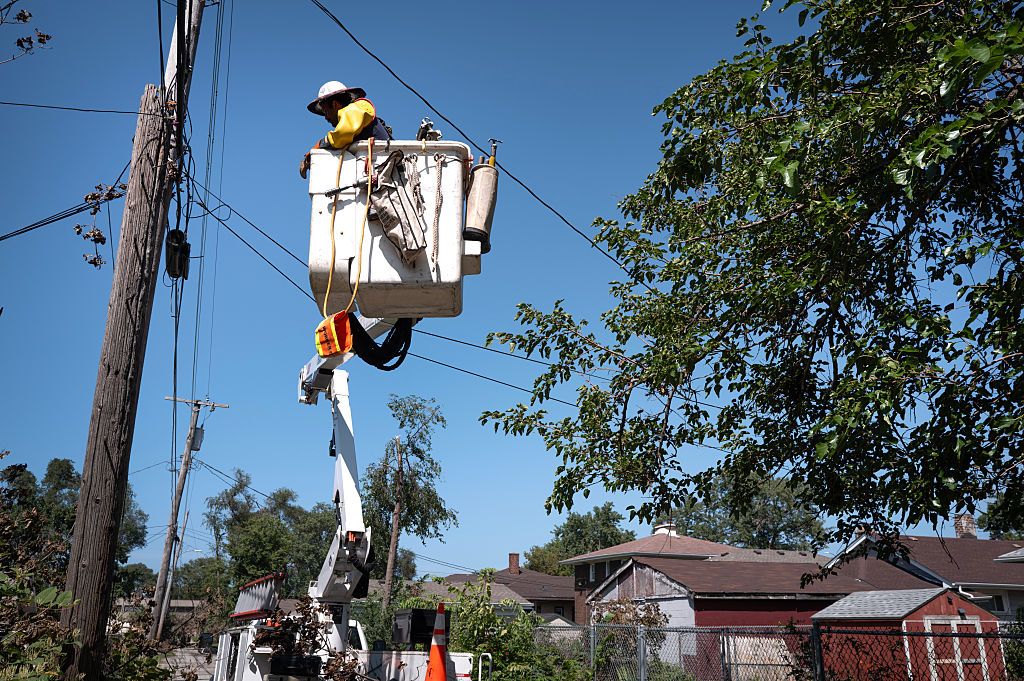
It’s best known as the city where the Jacksons – Michael, Janet, and the rest of the clan – was born and raised until their growing fame made them move to Los Angeles. But now, Gary, Indiana, a declining steel town in the so-called Rust Belt, is making news for less stellar reasons.
After a storm hit the region on Aug. 11, residents in the predominantly Black city have been without power. That has forced the city to delay the school year and left them helpless in the wake of a botched response.
The storm was defined as a possible derecho – an inland hurricane, according to USA Today. That is when sustained winds are at 58 mph or more, and the swath of the storm covers more than 250 miles.
Per multiple reports, 17,000 – 20,000 residents in Gary and the neighboring communities of Portage, Lake Station and Munster are still without power as of the weekend.
“We’re at Day 12 and 12 days is too long for families to be without power,” Gary mayor Eddie Melton said in a video posted to YouTube. “Twelve days is too long for parents to worry about their children and for businesses to lose revenue and for families to wonder when the relief is finally going to come. I want you to know I share that frustration.”
A representative for the North Indiana Public Service Company (NIPSCO), the power company overseeing the repairs, says the process won’t happen overnight.
“When I say complex, these aren’t simple repairs. These are systems that are being rebuilt,” Melody Birmingham, executive vice president of NIPSCO’s parent company NiSource and the president of NiSource’s utilities division, told NPR. “These are lines that ordinarily take us—and systems that ordinarily take weeks or months – that we are trying to accomplish in days and/or weeks.”
The storm happened just as NiSource announced a $140M dividend payout to its shareholders. Indiana governor Mike Braun called the delays in returning power to residents inexcusable.
“NIPSCO has ample resources to get the job done in Northwest Indiana, but they continue to fail Hoosiers,” he posted on his social media accounts. “NIPSCO is a monopoly with a responsibility to ratepayers. Residents are forced to rely on them for their safety and comfort, and they must get the power back on NOW.”
He added, “I have mobilized the Indiana National Guard and sent teams from Indiana State Police, Department of Natural Resources & Department of Correction to literally clear the way for NIPSCO utility crews. There is no excuse for these delays.”
It’s been speculated that a lack of maintenance in areas covered by NIPSCO may have contributed to delays in returning power. They cite possible overgrown vegetation blocking right-of-way areas. Braun has ordered an investigation.
But that comes too little too late for impacted residents in a city that is 80% Black, more than 30% of whom live in poverty.
“At night we’re sweating, we’re irritable, we have children to look out for, elderly people who need electricity for oxygen tanks,” Shatiya Hardin told CBS News.
“It’s not OK for us to continually be in survival mode.”
Residents have already filed a class-action suit against NIPSCO, accusing it of negligence that led to the poor response.
“We have engaged additional contractor crews throughout our service territory and continue to bring in support from neighboring utilities and mutual assistance partners from across the country,” NIPSCO said in a statement. “No outage is being overlooked, and no customer will be left behind as we continue this restoration effort.”
Gary joins Flint, Michigan, and New Orleans, Louisiana, among other predominantly Black cities that have endured disproportionate impact in the wake of environmental disasters. The crises are seen as the result of environmental racism, where Black and low-income communities are not just abandoned during natural disasters, but often live in or near harmful industrial areas or are subject to hazardous conditions when power plants, data centers and more are built nearby.
“Environmental challenges that many of our communities face, including climate challenges, are made worse by racial redlining that occurred 100 years ago, when Black communities were not provided flood protection, were not provided the kinds of trees and green space and landscaping and design,” Robert Bullard, known as the ‘father of environmental justice,’ told Vox in 2021.
He continued, “In the 2020s, those same areas that were redlined are hotter because there are no trees, green canopy. They’re more prone to floods. They have more pollution, and they have more Covid-19 infections, hospitalizations, and deaths. You talk about what has happened over these years because of systemic racism and planners and policy and financing.”
In conjunction with Ace Hardware, The Salvation Army and Indiana Pacers guard Tyrese Haliburton, food influencer Keith Lee is spearheading a relief effort on Monday, Aug. 24. It’s the day some residents have been promised a restoration of power.
Lee was already scheduled to tour Midwestern restaurants and rerouted his trip to provide assistance to Gary. Haliburton says he will match any donations made.
“If there’s anything we can possibly do, I’m going to do it,” Lee said on social media. “If I can do anything to make sure that we’re heard, and everybody knows we are a community and we’re gonna stand together, I’ll do that.”
See social media’s reaction to the lengthy power outage below.
Thousands In Gary, Indiana Without Power For Almost 2 Weeks As Black Community Outrage Grows - Page 3 was originally published on cassiuslife.com


