Crying On TikTok Won’t Solve The Literacy Crisis [Op-Ed]
Your Students Can’t Read. Crying On TikTok Won’t Solve America’s Literacy Crisis [Op-Ed]

Some years ago, I was a new professor walking into my first day of a graduate-level journalism class, excited and ready to teach features writing. I came in with my detailed syllabus, lectures, and tutorials mapped out for the semester. And I had all my assumptions about what my students should already know and what teaching meant. I was going to give my students the kind of rigorous education that I had received from my teachers and professors while coming of age in the 1990s and 2000s.
They were master’s-level students, after all, and they should have already been familiar with the most fundamental building blocks of news writing. So when I started talking about writing strong ledes and nut grafs for their stories, I assumed we were all starting from the same place.
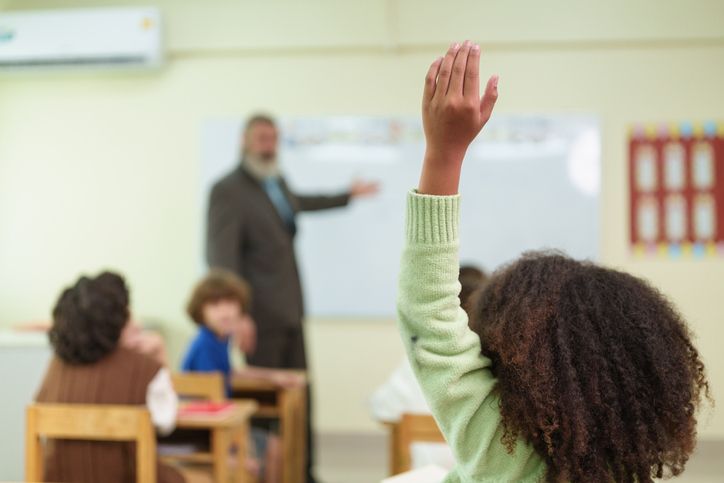
But then a student raised his hand and stunned me. “Dr. P, what’s a lede?”
My mouth dropped, and I froze in one of the aisles for a few seconds. Did he really just ask me that question? A whole graduate student? How had he gotten through four years of college journalism courses and made it all the way to grad school not knowing what a lede is? Why doesn’t he know?
I remember that at that moment I couldn’t find the words. When our eyes met, I could see that he looked desperate to know, but also unsettled by the fact that he didn’t know. He gave me the kind of look that says, Please don’t think less of me. Please don’t think I don’t belong here. And that look broke me because I knew that somebody, or maybe several somebodies and institutions, had failed him along the way, and what he didn’t know was not an indictment of him, but evidence of problems along the educational pipeline.
When my eyes panned across the classroom, I realized that most of the other students were wearing versions of the same expression: uncertainty, embarrassment, and the dread of being exposed. So I asked, “Who else does not know what a lede or nutgraf is?”
Almost every hand in that class full of aspiring journalists went up.
I felt a whole range of emotions rush over my body. I was angry, sad, and scared because so much had been withheld from them. How were they going to tell stories and get published that semester? How were they supposed to land internships and jobs? I was worried about them entering newsrooms where they would be expected to know things they hadn’t been properly taught, or editors would look at them and think they lacked intelligence, discipline, and potential.
So, I had a choice. I could have stood there judging and grilling them about why they didn’t know the basics, or I could make a pedagogical decision to meet them where they were and teach them what they had come to me to learn.
One thing I didn’t do was pull out my phone and rant in a tearful video on social media about how I have master’s students who don’t know what a basic lede is! What the hell has happened to education in America? I didn’t tell the Internet that my students’ educational deficits were a sign of some generational apocalypse.
Sure, that content might have traveled across social media. Folks would have jumped into the comments and blamed parents, K-12 teachers, college professors, social media, and “standards.” And of course the usual blathering racist would have chimed in about affirmative action and Black intellectual inferiority.
Instead, I took a deep breath and said, “I’m not frustrated with you.” And I wasn’t.
I knew that whatever failures they brought into my classroom were now my responsibility to repair as their professor and mentor. And so, I threw out my dang syllabus because whatever I thought they should have known was irrelevant to what they actually knew. And I realized I had crafted a syllabus built around the students I had imagined, not the ones sitting right in front of me.
On that first day of class, my students’ vulnerabilities were forcing me to become a learner who needed to ask some critical questions: What happened to them? What do they know? What kind of education do they need from me? How do I teach them how to learn? They didn’t know it, but my students had forced me to recognize that rigor without first understanding where students actually are can become its own kind of failure. So I had only 16 weeks to identify the gaps, rebuild the foundation, and move my students forward without making them feel ashamed for what others had failed to teach them.
And so we started over, using Ubuntu, an African philosophy grounded in our shared humanity and mutual responsibility, which allowed us to co-create the learning experience together from where they actually were.
I reflected on that early teaching experience this week while watching the viral video of the teary-eyed Houston teacher Darius Williams as he shared his experience trying to teach Black and brown high school students on his second day of classes. He described 17- and 18-year-olds who cannot produce basic written work even with guidance. “They cannot read or write,” he said.
This country has a literacy problem that has been documented for at least half a century, dating back to when the federal government’s National Assessment of Educational Progress began measuring student achievement. Since the late 1960s, data have shown that American students have had chronic literacy problems. Back in 1983, the U.S. Department of Education’s National Commission on Excellence in Education published a landmark report, A Nation at Risk, concluding that roughly 13% of American 17-year-olds were functionally illiterate and that colleges were increasingly having to provide remedial instruction.
This problem has persisted for generations, so why do we keep seeing these viral videos and social media rants every school year about how these kids can’t read and write? Yes, something has clearly worsened. Maybe it’s digital distraction, pandemic disruption, eco-anxiety, our nasty political culture, or other contemporary factors that deserve our attention. But let’s not pretend that America’s literacy crisis began with this generation of teenagers when it has been documented for more than 50 years.
The problem Darius Williams described in his viral video is definitely real, and it serves as proof that this nation’s racist teaching system, with its unequal spending, alarming teacher churn, disciplinary practices, and routine advancement of low-performing students, is working exactly as designed. Should we be surprised to learn that unequal access to quality schools and preparation produces Black and brown students who are publicly shamed when they arrive at the end of the education pipeline carrying the evidence of those failures, or show up in college classrooms with them?
As I reached the end of his video, I said: “M’kay, so your students are struggling. It’s the second day of school. Sir, what are you going to do after you cry?”
Will teacher Williams assess his students individually to find out where their reading and writing skills break down? Will he look deeper into whether “can’t read or write” means decoding, fluency, vocabulary, comprehension, or something else? Does he plan to consult a reading specialist, or is he allowed to redesign instruction? Will he spend time figuring out what strengths he can build from? Does he possess the skills to teach his students how to move from the argument they can make to their “homebody” into claims, evidence, analysis, paragraph structure, revision, and eventually into a strong essay?
We already heard Williams say, “they can reason” and defend arguments. Okay, good. You’ve got something to work with, so start there. Now, pick up a piece of chalk or a dry erase marker and write the argument on the board. Have the students identify the claim, ask them what evidence supports it, show the argument they just made, and now move from speech to sentence to paragraph to essay. Boom! Teach!
I had so many questions, but his answers never came at the end of Williams’ video. Of course they didn’t because Williams’ video is just the latest installment in what has practically become an annual social-media ritual where an educator announces their horror about illiterate youth and we are left with yet another degrading cultural conversation about Black and brown youth. The pattern becomes striking when you line up some examples.
Remember that Philadelphia charter-school video that went viral last May? That video, which racked up 14 million views, sparked debates over high school literacy as viewers watched students struggle to pronounce words such as “silhouette” and “extraordinary.”
We’ve seen a wave of TikTok videos in which teachers confess that their students can’t read or write sentences. One teacher, whose video generated more than five million views, asked: “Why don’t y’all know that your kids aren’t performing on their grade level?” Last November, millions of viewers also watched viral videos of teachers announcing that they were quitting the profession after encountering students who can’t read, write, think critically, or work independently.
The same generational panic appeared in an Atlantic story about dozens of professors at elite universities who reported their students were arriving on campus having never read a full book in high school. For years now, we’ve seen a steady stream of these college students: “can’t read,” “won’t read,” “can’t write,” “can’t follow instructions,” “can’t pay attention for longer than a few minutes,” “can’t stay motivated” videos.
Yes, the data, the videos and the stories should scare the hell out of us. But despair, fear, and tears are not pedagogy. And turning children into exhibits while leaving the adults, institutions, and political choices surrounding them largely outside the frame will not solve this crisis.
Now, I’m not saying that K-12 teachers and college professors should single-handedly repair 12 years of educational neglect. We need to start with the structural inequalities like funding for districts, addressing under-resourced schools, exhausted teachers, teacher turnover, which is especially greatest in low-income communities serving students of color, chronic student absenteeism, inconsistent literacy instruction, and political leaders who have spent years attacking public education.
We also need to seriously address the digital environment where algorithmically engineered distractions are literally sabotaging young people’s brain development and their ability to learn. Past generations of students didn’t have to grow up and learn in an attention economy whose business model depended on their eyes constantly moving from one visual stimulus to another and from one auditory alert to the next. Research on screen time and digital addiction has repeatedly documented associations between software, games, and social media platforms and negative impacts on attention span, long-form reading, and problem-solving, especially among digital natives who’ve been primed to search for quick and easy answers but don’t retain knowledge.
So the problem isn’t just “this generation of kids is glued to phones and video games.” I’m not being hyperbolic when I say that their brains have been hacked by a digital economy. And that digital economy has been engineered by tech bros, psychologists, and neuroscientists who won’t even let their own children interface with the products they produce because they know full well that digital devices interrupt all the skills critical thinking requires: patience, concentration, frustration tolerance, memory, and sustained thought.
There’s also something ethically troubling to me about Williams and so many other educators producing these viral videos, regardless of their motives. I am not questioning the authenticity of his despair. But students come into our classrooms in an extremely vulnerable position. They tell us every day what they know and what they don’t know. They are saying to us, “teach me.” Their lack of knowledge should not become a teacher or professor’s viral testimony, even without names, and especially when there’s zero pedagogical response beyond the shock and tears. When students read or watch this context, how can they expect to trust their teachers or to know that the classroom is a safe space to not know things?
I empathize with Williams and all educators who are facing these distressing moments. I know exactly what they feel like. But as educators, we have a choice: we can say “it is what it is” and pass students along the educational pipeline, turn their learning outcomes into viral content and spectacles, or turn them into a lesson plan or syllabus. You can decide to be a witness to educational failure, or you can accept the responsibility for repairing it.
At the end of the day, my first cohort of graduate students didn’t need my shock, despair, and tears. They needed my humility, skills, patience, creativity, flexibility, willingness to up my pedagogical methods, and willingness to start over sometimes. They taught me to understand that what they didn’t know wasn’t the end of the lesson; it was the beginning. Ultimately, I learned that to master the craft of teaching, you must first be a servant to your students.
SEE ALSO:
[Op-Ed] Trump Vaccine Rollback Is Part Of War On Black, Brown Children
Trump’s New Student Loan Rules Could Decide Who Stays In College
Your Students Can’t Read. Crying On TikTok Won’t Solve America’s Literacy Crisis [Op-Ed] was originally published on newsone.com


