Tuskegee Dress Code And The Deliberate Blindness Of Decorum
Tuskegee’s Dress Code And The Deliberate Blindness Of Decorum

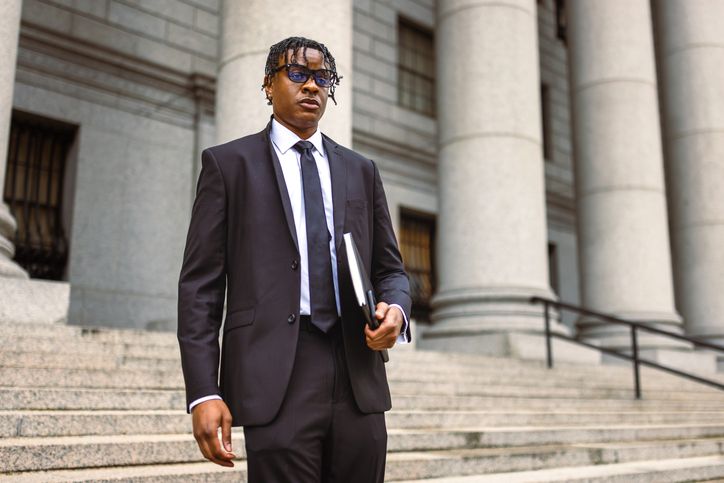
If attending college is one of the best pathways to a career, and if the adage “dressing for the job you want, not the one you have” still holds true, then establishing a dress code at an HBCU shouldn’t be a big deal.
We can’t preach the idea of needing to be “twice as good,” and then complain when it’s time to be…“twice as good.”
“A critical part of being ready for and confident in business environments is being appropriately dressed,” said Walter P. Cooper Sr., Director of the Career Education and Leadership Development Center at Tuskegee University, about the new dress code that the school has put into place that has some in the Black community unnecessarily up in arms. “We know that every workplace doesn’t require business attire – our center includes business casual and casual attire, too – but as our students prepare to enter those workplace scenarios that do, it is important that access to the right wardrobe is not a barrier.”
When you break down the discussion around Tuskegee’s new dress code, it becomes clear that the negative discourse is misguided. It highlights how people often profess beliefs in ideals they fail to practice. Those upset about the banning of bedroom shoes, bonnets, du-rags, and revealing clothing in the classroom and cafeteria need to realize that these restrictions are not meant to attack personal expression but to maintain decorum in specific settings. Additionally, the required business attire is being made available to those who may be without.
“One of the key pillars of Tuskegee’s Renaissance Era is our focus on career readiness for our students,” Tuskegee president and CEO, Dr. Mark A. Brown, said in a statement. “Academically, we are equipping our students to stand shoulder to shoulder with any candidates competing for roles in the global economy. The Golden Tigers Community Closet is an important way to ensure that every student can also feel confidently dressed when they step into those spaces.”
This is the part where I inform you that it’s normal to see students on HBCU campuses dressed up on regular occasions, which serves as a major reason why rebuttals to this decision lack logic.
Much of the pushback against the dress code has focused on it being viewed as the school’s participation in “respectability politics” — a term that is frequently misused. A decade ago, Black American author and critic Damon Young wrote about the phenomenon and stated that, “instead of requiring the people and the institutions committing and propagating racist acts to change, it asks the people harmed by the racism to change to stop being harmed by the racism.”
That is not what Tuskegee is doing, as their decision is not an attempt to appease white folks in hopes of being deemed more acceptable to the white gaze. This is not an attack on bonnets and du-rags (two items that play a vital role in Black haircare) or on the class systems that exist within our own race — so save your “Talented Tenth” and “Our Kind Of People” argument. This decision is about avoiding unkempt appearances in spaces that require decorum. Preparing students for career readiness so that they can thrive in business settings is not an ideal beholden to whiteness, as Black people conduct business in the proper attire daily. Dress codes serve a purpose, although people often disregard them until they feel excluded from spaces they don’t have access to anyway.
However, we cannot ignore the history of dress codes in America, which has often included the restriction of access to Black people. For instance, when the NBA infamously put one into action in 2005, it was done to temper the “thug” label that was being put on some players at the time. Over time, it led to the league becoming more fashionable as pregame tunnel entrances allow players to declare their personal style. Furthermore, dress codes were also why older millennials/Gen Xers, like myself, wore business casual clothing to the club. And for all of us who lived through that period, we will also tell you that while those environments were not guaranteed to be free from danger, they did feel safer.
There’s also the fact that Black people often embrace dress codes without issue. Here’s a list of events that require a certain attire that doesn’t include bonnets and du-rags:
• Labor Day/White parties
• Church — specifically Easter and Mother’s Day
• Funerals
• Weddings
• Black-tie concerts hosted by rappers in Las Vegas
• Work uniforms
• Ritual ceremonies
• Upscale restaurants
One of the best ways to gauge a college or university’s credibility and legitimacy is by considering its alumni base. In the case of Tuskegee, notable figures like Lionel Richie, Ralph Ellison, Tom Joyner, Keenan Ivory Wayans, Daniel “Chappie” James Jr., Betty Shabazz, and the Tuskegee Airmen are just a few of the trailblazers who played a part in making that campus a destination for so many. If those Tuskegee legends understood the importance of decorum, then it should not be a problem for the current student body to do the same.
In 2009, my alma mater, Morehouse College, faced a similar situation when a dress code was announced. Hats, du-rags, pajamas, and hoods were banned in classes, and so were sunglasses, grillz, and the wearing of jeans at certain events. However, much of this was overlooked due to the focus on prohibiting women’s clothing and banning “cross-dressing.” In the moment, and in hindsight, it was a homophobic decision targeting our LGBTQ brothers. And while there was fault to blame on both sides, as the drastic reaction to certain traditions that were being bucked was overzealous, the hoopla and headlines eventually faded, and the atmosphere on campus returned to normal — much like it will at Tuskegee.
In the coming weeks and months, high school students from around the country will begin the college application process. If some families eliminate Tuskegee from their list because the university wants its students to “dress like they’ve got some sense” in certain situations, I assure you that the administration in Alabama and those working in the admissions office won’t have hurt feelings. After all, if du-rags and bonnets are your breaking point, then Tuskegee was never the place for you anyway.
Besides, being upset that a private school has a dress code is like being mad when there’s a line in the cafeteria on an HBCU campus on Fried Chicken Wednesdays. It just comes with the territory.
Carron J. Phillips is an award-winning journalist who writes on race, culture, social issues, politics, and sports. He hails from Saginaw, Michigan, and is a graduate of Morehouse College and Syracuse University. Follow his Substack to keep up with more of his work.
SEE ALSO:
Tuskegee University Bans Bonnets And Du-Rags On Campus. Let’s Discuss
Tuskegee Airmen Museum Teaches Black Teens To Fly
Tuskegee’s Dress Code And The Deliberate Blindness Of Decorum was originally published on newsone.com


