WNBA’s Leadership Problem Has Become Impossible To Ignore
How the WNBA’s Leadership Problem Has Become Impossible To Ignore

The saxophones are getting louder.
The WNBA is turning into an epic telenovela. In the past two weeks alone, we have seen Mercury star Alyssa Thomas become the target of racial slurs and death threats after a hard foul.
We have watched as The King Center, founded by Coretta Scott King to preserve and advance Martin Luther King Jr.’s legacy, stepped out of its traditional bounds to release a statement publicly calling out WNBA leadership for failing to protect its Black and LGBTQ players.
We are seeing a fresh wave of dissatisfaction and front-office friction in Chicago, just as the league and its players prepare to head there for the WNBA’s All-Star Weekend.
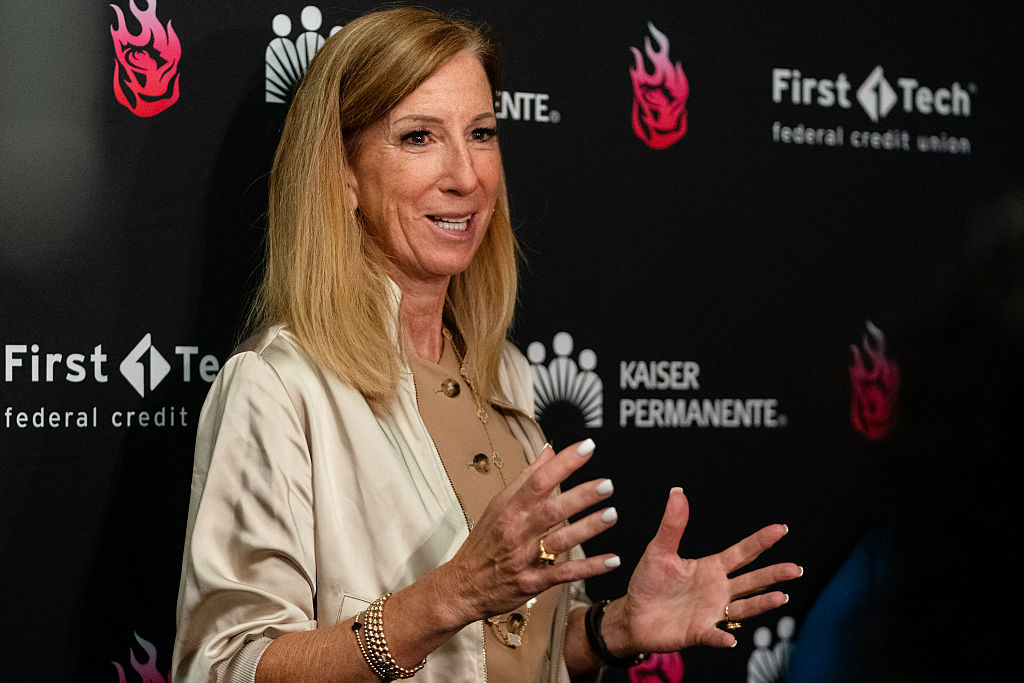
And, to cap it all off, Cathy Engelbert, the commissioner responsible for steering the league was loudly and repeatedly booed on the court during the presentation of her Commissioner’s Cup trophy, during a ceremony that should have been a joyous celebration after the home team clinched the trophy.
And the music isn’t letting up.
It is mind-boggling that this is the current state of affairs during what is supposed to be a milestone celebration. This is the WNBA’s 30th season. It is operating under a new collective bargaining agreement that has delivered record salaries and expanded benefits to its players. It is showcasing arguably one of the most talented rookie classes in years. By every commercial metric, the focus should be on elite basketball playing out against the backdrop of an unprecedented economic and competitive renaissance.
Instead, here we are. With the volume still rising.
I should be spending this pivotal period crafting beautiful pieces that honor the league’s foundational legacy. I should be writing about the pioneers, the overwhelming majority of them Black women, who gritted through decades of minimal resources, structural disrespect, and pay so low it forced them onto rosters of teams overseas during the WNBA offseason.
Black women like former Liberty center Kym Hampton and former Liberty guard Vickie Johnson have carried their legacies forward in spectacular fashion. Hampton has remained a visible ambassador for the game, and Johnson has carved out a successful coaching career.
Both former players were part of the league’s original foundation as it began its journey from empty arenas to a brick-by-brick building of the sports powerhouse we all enjoy today. I should be chronicling their brilliance, celebrating their hard work, and helping to document and cement their place in sports history in general and women’s basketball history in particular.
Instead, here I am. Feeling drowned out by the saxophones and increasingly feeling like I’ve been deposited into my local Dave & Buster’s to play a game of impromptu whack-a-mole.
We’ve still got a little more than half a season to go and this past weekend not even what should have been a routine game prevented the next shoe from dropping. I expected the Fever vs. Aces matchup to be a fairly mild one with Caitlin Clark on the bench nursing a back injury.
Instead, I found myself staring at my television in utter disbelief at the game’s announcers. Discussing the wave of online harassment, including death threats directed at Black women players and their families, they urged players to ignore social media, keep their focus on their jobs playing basketball, and reminded them that “the product is the narrative.” Those comments landed at a time when Black players across the league have been speaking publicly about racial abuse, harassment, and death threats against their families.
Public conversations shape the culture around any league. Language that treats the safety and well-being of players as an obstacle to be ignored contributes to an environment in which the burden continues to fall on players rather than on the institutions responsible for protecting them.
The WNBA and its commissioner, Cathy Engelbert, should be deeply embarrassed by this coverage. Just as Engelbert should be deeply embarrassed that the King Center, the institutional guardian of Martin Luther King Jr.’s legacy of peace and justice, found the league’s overall pattern of behavior so egregious that it has called the league out for failing to protect Black and LGBTQ players under her watch.
One of the league’s own franchises, the Atlanta Dream, carries part of Dr. King’s legacy, honoring his “I Have a Dream” speech, and the team maintains an active partnership with The King Center. Having the center publicly step in to demand that league executives protect the Black women who make up the majority of the league’s players and remain its backbone should be a wake-up call that a change in leadership at the very top is imperative.
Now the sound of the saxophones has reached New York, straight to Cathy Engelbert’s office at the WNBA headquarters, where they land alongside the King Center’s statement, adding to a long history of racial grievances where Black women in this league have gone unprotected.
Like so many other complaints and calls to action, the center’s statement appears to have been tossed onto that same pile, left for the league to ignore until its back is against the wall, and even then handled with an amateur hand that falls short of anything resembling real accountability or protection.
Adding to the pile is Engelbert’s ongoing inability and unwillingness to engage with players directly when they’ve been targeted and racially harassed. When Phoenix Mercury star Alyssa Thomas spoke out about the torrent of racial slurs and death threats she and her family were receiving, she said Engelbert never reached out directly.
It was only after Thomas called out that silence to reporters that the commissioner scrambled to issue a reactive, boilerplate statement, one that never named Thomas directly and buried any real condemnation of racism inside language vague enough to cover whatever complaint or bad press the league might face next.
Then, reports from league insiders surfaced suggesting the two had exchanged texts, a walk back that has the fingerprints of the league’s PR machine written all over it.
This isn’t the first time Engelbert has left Black players out to dry while protecting her own office. Minnesota Lynx star Napheesa Collier said much the same thing last year, calling Engelbert’s leadership “the worst in the world” and alleging the commissioner told her privately that players (including Caitlin Clark) should be grateful for what the league had given them. Engelbert denied making those comments and never did the work to directly repair the relationship with Collier or the players afterward.
In 2024, when Engelbert was asked directly about the racist attacks flooding Angel Reese’s mentions, she pivoted to talking about rivalries being good for business instead of condemning the racism aimed at the rookie.
Engelbert also hasn’t addressed, despite promising to, the ongoing concerns about uneven officiating, where Black players aren’t getting calls and are left to absorb rough play that goes unchecked.
The refrain just keeps building. And the problems extend to the front offices of the league’s teams.
Look at the Chicago Sky, a franchise already weighed down by a history of internal drama, where this week its seasoned star, Skylar Diggins, was blindsided by a move to the bench after being brought in as a starter.
Diggins used social media and the press to share her experiences dealing with the same institutional negligence, substandard training accommodations, and lack of professional standards that Dream star Angel Reese aired out during her own stint in Chicago.
It’s not a good look that the league is packing its bags to head to Chicago soon for All-Star Weekend as the hosting franchise has been publicly blasted for actively penalizing, isolating, and under-resourcing its veteran Black woman star who has been putting her body on the line to bring home wins for a team that ended last season with one of the worst records in the WNBA.
I fully expect the music to continue building towards a crescendo. The question is whether league leadership will finally do something to change the song.
Every time this league asks a Black woman to absorb rough play on the court, abusive racial harassment, and death threats off of it, all under a commissioner who shows no compassion, no sympathy, and no real protection, it exposes just how ill-equipped this league is to lead the very players who built it.
At some point, the noise stops being a metaphor and becomes a clear indictment.
My hope is that there’s an intervention before the saxophones drown out the league entirely. Somebody at the top needs to start listening and making changes, because losing Black women, fans, and players, who built this league, means pretty soon there will be nothing left of the league to save.
SEE ALSO:
In A World Full Of Targets, The WNBA Needs To Be A Costco
Realities Of Being A Masculine-Presenting Black Woman In The Workplace
How the WNBA’s Leadership Problem Has Become Impossible To Ignore was originally published on newsone.com


