4 Expert Tips To Help You Grow Out Your Relaxer
The Relaxer Grow-Out Struggle Is Real — 4 Expert Tips To Survive The Awkward Phase Without Losing Your Hair - Page 2


Growing out a relaxer is all about learning how to care for two different textures at the same time: your natural new growth and your relaxed ends, which can feel like an extreme battle. So how do you grow out your relaxed hair without causing further damage? Here’s what experts say.
1. Identify your line of demarcation and adopt a good wash day routine.

First, the key to a successful transition is preventing breakage where your relaxed and natural hair textures meet, also known as the line of demarcation, according to Design Essentials. This area is the weakest part of the hair, so keeping your hair moisturized, protected, and handled gently is essential throughout the process. One way to do this is by washing your hair consistently every seven days with a good shampoo and deep conditioner. Using a steamer or hooded dryer can also help lock moisture into the hair, especially when paired with a quality leave-in conditioner to keep strands hydrated and prevent breakage.
This is especially important because relaxers alter the structure of the hair by “breaking disulfide bonds in the hair to loosen your curl pattern,” cosmetic chemist Erica Douglas previously told Allure in an interview published May 18. Douglas explained that this process weakens the strands, making conditioning and strengthening treatments especially important during the transition period. Products with bond-building ingredients, such as the Olaplex No.5 Hydrating Curl Conditioner or the Redken Acidic Bonding Curls Conditioner, can help support healthier hair while transitioning.
2. Detangle with ease and care.
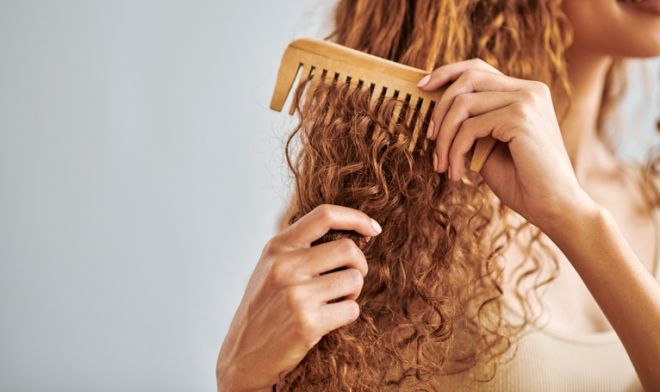
Here’s another great tip on how to grow out your relaxed hair: detangling with ease and care. Detangling is another critical part of the transition process because new growth can easily become tangled, leading to breakage. Be sure to use a wide-tooth comb and detangle from the ends upward toward the roots. Parting your hair into sections, anywhere from six to eight, can make the process much easier, experts at Hairlicious noted in a 2020 article for Essence. Never rush through detangling, especially when your hair is wet, because rough handling can cause unnecessary shedding and breakage.
3. Decide whether to cut your hair gradually or do a big chop.
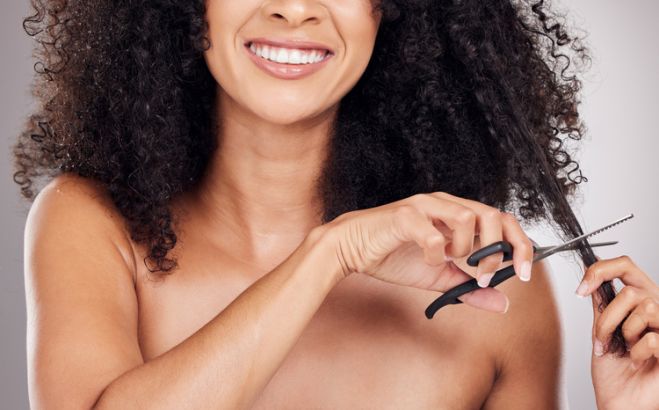
Transitioning takes patience, consistency, and a routine focused on maintaining strength and moisture. Start by deciding whether you want to transition slowly or do a big chop. A big chop means cutting off all of the relaxed hair at once so you can fully embrace your natural texture immediately. If you prefer a gradual transition, trim small amounts of relaxed hair every six to eight weeks while allowing your natural hair to grow over time. Ultimately, it’s about choosing what works best for your hair.
RELATED CONTENT: Why Do Black People Wear Bonnets?
Still, if you’re hoping to avoid cutting your relaxed ends altogether, experts say that’s unrealistic. At some point, the chemically processed hair will need to be removed. Brendnetta Ashley explained this during an interview with Allure on May 18.
“Eventually, it’s going to get to a point where you have two different textures,” she explained. “You have the mid-lengths and the ends, which have been living on the head the longest, and are straight and delicate from chemical processing. Then you have your new growth, your curly texture.”
As your natural hair continues to grow in, that line of demarcation becomes more pronounced and often more difficult to manage, making trims or a big chop essential for maintaining healthier hair.
4. Avoid heat and adopt a protective style that prevents breakage.
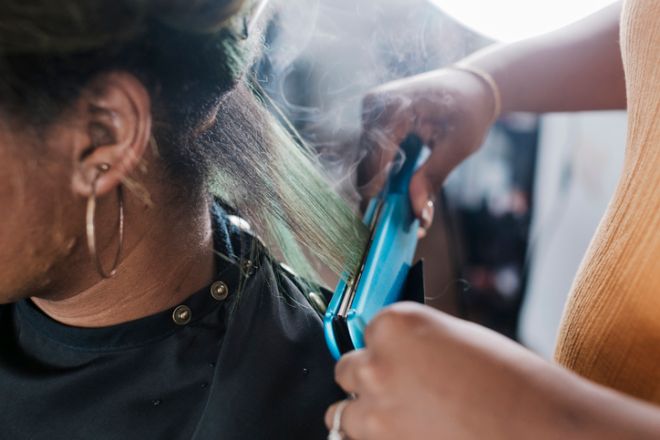
During this stage, avoid relying on excessive heat to blend the two textures. Direct heat weakens the line of demarcation and can lead to snapping and breakage.
Protective styling can also make growing out a relaxer much easier. Styles such as flat twists, braid-outs, perm rod sets, and low buns help minimize daily manipulation and protect the ends from damage. Some people also choose extensions, sew-ins, or box braids to reduce styling stress, but it’s still important to care for your scalp and avoid placing too much tension on your edges and scalp. Protective styles work best when they are not too tight and when the hair underneath remains properly moisturized.
Nighttime protection is another important part of retaining length while transitioning. Cotton pillowcases can pull moisture from the hair and create friction that causes breakage, especially on relaxed ends. Wrapping your hair with a silk or satin scarf before bed and sleeping on a satin or silk pillowcase helps preserve moisture, reduce tangles, and keep your hair smoother overnight.
Consistency is the key. A tried and trusted routine can make a noticeable difference in preventing breakage during the grow-out process and help you to grow out your relaxed hair with ease.
RELATED CONTENT: Is Hair Relaxer Dangerous? Congresswomen Want FDA To Act On Proposed Chemical Ban
The Relaxer Grow-Out Struggle Is Real — 4 Expert Tips To Survive The Awkward Phase Without Losing Your Hair - Page 2 was originally published on madamenoire.com


