Black Alabama Residents Suffering Due To Trump Admin Racism
Black Alabama Residents Suffering Due To Trump Admin's Racist Policies

White conservatives think we’re being inflammatory when we say the Trump administration is a white supremacist organization. In truth, we’re not even being hyperbolic.
At the start of President Donald Trump’s second term, the DOJ’s Civil Rights Division saw a mass exodus of more than 100 attorneys, who resigned from the department due to its expressed agenda to steer away from cases focused on anti-Black discrimination in favor of cases focused on anti-white discrimination, which the administration has had such a difficult time finding organically that it is soliciting white men to come forward, trying to join anti-white discrimination lawsuits that had nothing to do with the federal government, and launching investigations into corporations over anti-white discrimination claims that weren’t even made by anyone in particular.
Meanwhile, the MAGA-fied DOJ is even reversing decisions the department made under the administration of President Joe Biden that attempted to correct discrimination against Black people, and Black communities are still suffering because of those reversals — including the rural Black communities in Lowndes County, Alabama, and its surrounding area, known as the Black Belt, where the administration ended a wastewater settlement reached during Biden’s time in office, calling it “environmental justice as viewed through a distorting, DEI lens,” simply because environmental racism was addressed in the reaching of the settlement. Now, the people of that town are still grappling with old, faulty septic tanks and exposure to raw sewage, because the white supremacist regime currently running our country needs to hold on to its anti-DEI narrative for dear life.
From the New York Times:
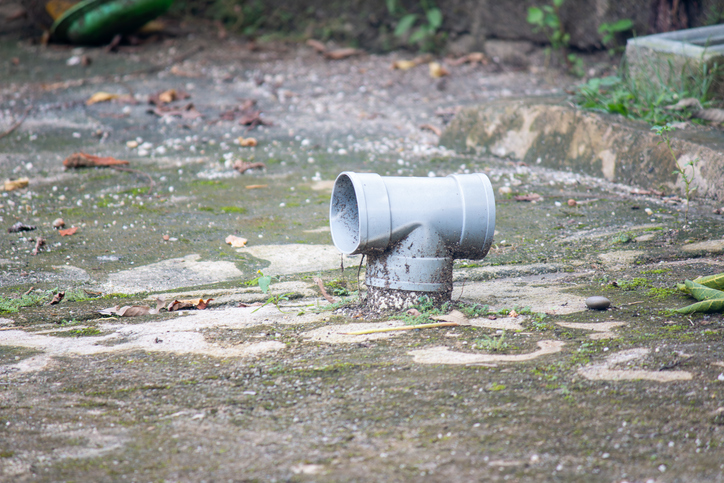
Behind Dana Anderson’s home in central Alabama, a plastic pipe carries waste from her toilet through her backyard, discarding it outdoors. Three or four times a year, a spell of heavy rain forces the excrement back up into the house.
It is a plight that has long plagued residents across Alabama’s Black Belt, a stretch of largely rural counties so named for its dark soil and history of slavery. Cotton flourished in the region for the same reasons that conventional septic tanks fail there: The soil is dense and holds onto water. Today there are more than 50,000 people in the region who pipe raw sewage into open trenches and pits.
Now, a seeming solution to the public health problem has been stymied by an unlikely force: the Trump administration’s war on diversity, equity and inclusion programs.
Three years ago, the Biden administration concluded in its first-ever environmental justice investigation that Alabama officials had failed to adequately address the sanitation crisis disproportionately affecting the Black residents of Lowndes County. The state agreed to an interim agreement that unlocked millions of dollars in federal funding to provide homeowners with septic tanks that could handle the difficult soil.
But soon after President Trump returned to office last year, the Justice Department ended the settlement, calling it “illegal DEI.”
“We thought we had a solution,” Catherine Coleman Flowers, the founder of the Alabama-based Center for Rural Enterprise and Environmental Justice, said in a recent interview with the Times. “It is almost like we are starting all over again.”
And that’s pretty much the size of it, when it comes to virtually every decision this administration of rabid white nationalists has made since the start of Trump’s second term — we’re just moving backward, to the point where it feels like we’re starting all over again.
After all, the Biden administration reached the settlement with Lowndes County as a result of the Justice Department’s first environmental justice investigation under Title VI of the Civil Rights Act of 1964, which is the same clause the Trump administration has cited to justify the president’s bid to rid the federal government of all things DEI and threaten state and private institutions with defunding if they don’t do the same.
“We cannot return to a time when the basic needs of these communities were ignored,” Rep. Terri Sewell (D-Ala.), whose district covers the region, said, prompting her to champion the 2023 federal agreement.
The settlement didn’t just provide funds for a new sanitation infrastructure for the area; it “stopped the state from leveling fines and other penalties against Lowndes County residents who violated sanitation laws,” and “ensured that the state would be an active participant in the solution — requiring it to track the number of residents without reliable sanitation, disseminate information about the health risks from raw sewage exposure, and seek funding sources to comply with the agreement,” as the Times reported.
Now, it’s left to community organizers to pick up the slack caused by the federal government abandoning those communities, and leaving the residents to suffer substandard conditions.
More from the Times:
Across the Black Belt, circumstances vary. Some homeowners have straight pipes snaking behind their homes, where the untreated waste creeps over their property line onto their neighbor’s land. Others purchased conventional septic tanks decades ago, which have since failed and deteriorated into cesspools and lagoons.
The flies and odor can prevent homeowners from spending time in their backyards. One day in March, a property owner had a swarm of gnats perched on the walls of his bathtub that appeared to be waiting for waste to rise through the drain.
State researchers estimate that up to four million gallons of raw sewage enter the region’s water system per year.
The burden of installing septic systems falls on property owners if they live outside the limits of a municipal sewer system, as many in the Black Belt do. But many residents cannot afford the costly, engineered systems that are needed to withstand the impermeable clay soil. And local counties do not generate enough tax revenue to help.
In Lowndes County, for example, the poverty rate hovers around 30 percent, almost three times the national average.
Several nonprofit groups have taken on the work of installing septic tanks in the county.
Local organizers have also been working tirelessly to get new septic tanks to residents who desperately need them, but all of these non-profits and local organizers understand that without federal funding, they’re basically playing a hopeless game of whack-a-mole, helping the relatively few families they can as best they can, but lacking the resources to effect lasting change for the region as a whole.
“If the current administration doesn’t change their mind about funding, it won’t be solved,” said Sherry Bradley, the executive director of the Black Belt Unincorporated Wastewater Program. “We have a solution, but it takes funding.”
Yeah — it also takes a federal government that isn’t being run by a white supremacist organization. That’s where the problem truly begins.
SEE ALSO:
Trump Admin Ends Wastewater Settlement For Black Alabama Town
Federal Court Rules Alabama’s Racist Voting Map Dilutes Black Voting Power…Again
Black Alabama Residents Suffering Due To Trump Admin's Racist Policies was originally published on newsone.com