420 Laws: US Cannabis Legalization Through The Decades
420 Laws: US Cannabis Legalization Through The Decades

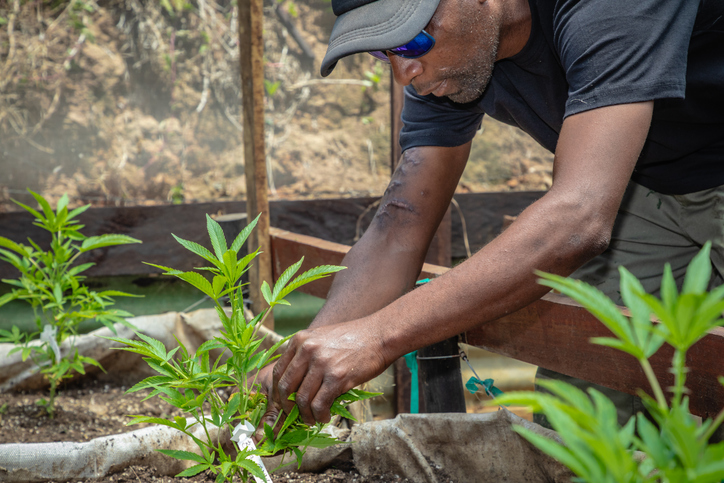
Happy 4/20, folks! It’s the most wonderful time of the year, when dispensaries have insane deals, the smell of that good kush fills the air, and we even get the Raw after WrestleMania. Before we celebrate, though, why don’t we take a look back at the long, fraught road toward cannabis legalization in the United States?
1600s-1800s
Believe it or not, the growing of hemp, the plant from which cannabis is derived, was actually encouraged by the government in both pre and post-revolutionary America for hundreds of years. In 1619, the Virginia Assembly passed legislation requiring every farmer to grow hemp. This was because hemp was a staple in shipbuilding, with the material being used heavily in ship rigging. While still a prominent crafting material, hemp’s use diminished after the invention of the cotton gin in the 1800s.
1900s-1950s
It wasn’t until we entered the 1900s that the United States significantly cracked down on hemp and cannabis usage. Laws against cannabis were driven by two forces: racism and capitalism.
The invention of the decorticator paved the way for hemp to become a cheaper alternative to wood pulp, used in book and newspaper publishing. Newspaper publisher William Randolph Hearst had already made significant investments in the timber industry and was not about to entertain any threats to his monopoly. Hearst used his newspaper empire to publish stories demonizing cannabis and effectively created a moral panic around the drug.
While hemp was largely used in crafting and some medicines, the use of recreational cannabis increased after the Mexican Revolution in 1910. In the wake of the Mexican Revolution, America saw an influx of Mexican immigrants. These immigrants would often smoke recreational cannabis to relax after work, as it was a cheaper alternative to drinking.
Hearst also had no qualms about indulging America’s appetite for racism by framing the use of cannabis by Black and Mexican people as examples of their inherent deviancy. Hearst’s efforts would lead to the Marijuana Tax Act of 1937, which made it more expensive to import hemp and criminalized the possession, sale, and use of recreational cannabis.
The criminalization of cannabis only intensified in the following decades, with the Boggs Act of 1951 treating cannabis similarly to heroin and introducing a mandatory minimum sentence of two to five years for cannabis possession for first-time offenders. The Narcotics Control Act of 1956 intensified the mandatory minimum to two to 10 years for first-time offenders.
1960s-1970s
The countercultural movements of the ‘60s and ‘70s led to a rise in marijuana usage among middle-class whites throughout the ’60s. Shockingly, as more white people began to use the drug, the government began to soften its approach (I wonder why). President John F. Kennedy commissioned a report in 1963 that ultimately concluded that cannabis usage did not lead to violence or the use of harder drugs.
A separate report commissioned by President Lyndon B. Johnson found that the Marijuana Tax Act was ultimately ineffective and improperly lumped marijuana in with other, harder drugs. By 1970, Congress voted to end the mandatory minimum sentencing for cannabis possession with the Drug Abuse Prevention and Control Act of 1970. In addition to ending mandatory minimum sentencing, the act also treated marijuana use as a health care issue and sought to provide treatment and rehabilitation services.
1980s
Many of the ills facing modern society can be traced back to Ronald Reagan’s presidency in the ‘80s. While I could spend 1000 words here alone recapping how Reagan’s presidency directly led us into our late capitalist hellscape, we’re going to focus on his infamous War on Drugs.
While the ‘60s and ‘70s saw the federal government soften its approach, the War on Drugs took a page from the Boggs Act and lumped cannabis in with hard, incredibly addictive drugs like heroin and crack/cocaine. The federal government justified this by labeling cannabis as a dangerous gateway drug that inevitably led users to partake in other hard drugs like crack. Mandatory minimums were back, spurring a wave of mass incarceration that largely impacted Black and brown communities. Reagan also signed an executive order mandating drug testing for federal workers and setting the precedent for private businesses to follow suit.
Calling Reagan’s drug policy draconian would be an understatement, y’all.
1990s-2000s
The ‘90s are when we would start to see states and the federal government diverge on cannabis laws. The federal government maintained that marijuana was a Schedule I controlled substance with no legitimate medical usage. Surprisingly, the ‘90s are the decade with the highest number of arrests related to cannabis possession. This was due to President George H.W. Bush’s renewed War on Drugs, which took an aggressive approach to policing marijuana that continued even through Bill Clinton’s presidency.
While the federal government intensified its criminalization of cannabis, California voters took one of the first steps toward marijuana legalization after approving a measure legalizing medical marijuana. Throughout the 2000s, attitudes toward cannabis use would soften, as more states followed California’s example and began legalizing medical marijuana. Hawaii, Colorado, Nevada, Vermont, Montana, Rhode Island, New Mexico, and Michigan would all legalize medical marijuana by the end of the 2000s, with Nevada even decriminalizing possession of small amounts of cannabis.
2010s-2020s
As attitudes continued to soften toward cannabis use, so did the laws. Colorado and Washington became the first states to legalize recreational cannabis in 2012. President Barack Obama’s Justice Department announced it would not challenge states that legalized recreational cannabis in the 2013 Cole Memo. Obama took a relatively hands-off approach when it came to states legalizing recreational cannabis use, but didn’t go so far as to decriminalize it on the federal level.
In the decade that followed, 24 states would legalize recreational cannabis use, including California, Maine, Nevada, Arizona, and even Ohio. Which having recently visited Ohio, thank god they did, because there is literally nothing else to do there. While I’ve been overjoyed to live in states where cannabis is legal, I’m also remiss that the next generation of stoners will never know the experience of making awkward small talk with your plug while he bags up your flower.
Oh 2015. How I miss you so.
Where We’re At Now
Despite more and more states voting to legalize recreational marijuana, the drug is still technically illegal on the federal level. It should come as no surprise that even as more states legalize cannabis, Black people are still disproportionately represented when it comes to arrests over cannabis possession. There has been some progress when it comes to restorative justice for those who were incarcerated for cannabis possession as a result of states moving to legalize it.
On the federal level, President Joe Biden pardoned thousands of people who were convicted of use and simple possession of marijuana in 2023. There have been notable efforts in the states that have legalized recreational cannabis to pardon or provide clemency for people who were jailed for a crime that is no longer illegal.
Despite the progress that’s been made at the state level, Cannabis is still classified as a Schedule I drug by the federal government, though President Donald Trump has signed an executive order to expedite its reclassification as a Schedule III drug. It would still be illegal on the federal level, but the rescheduling would allow more research to be done on the medical uses of cannabis.
So if you live in D.C., or one of the 24 states where recreational cannabis is legal, it’s your duty as an American to spark one up in honor of the progress we’ve made in legalizing cannabis, and the progress we still need to make.
And with that, I’m gonna go light one up and see what Roman Reigns is talking about on Raw.
SEE ALSO:
What Does 420 Mean For Black People Shut Out Of The Cannabis Industry?
420: Why It’s Time to Celebrate Cannabis and Black Advocacy
420 Laws: US Cannabis Legalization Through The Decades was originally published on newsone.com