Target Chose White Supremacy Over Customer Loyalty

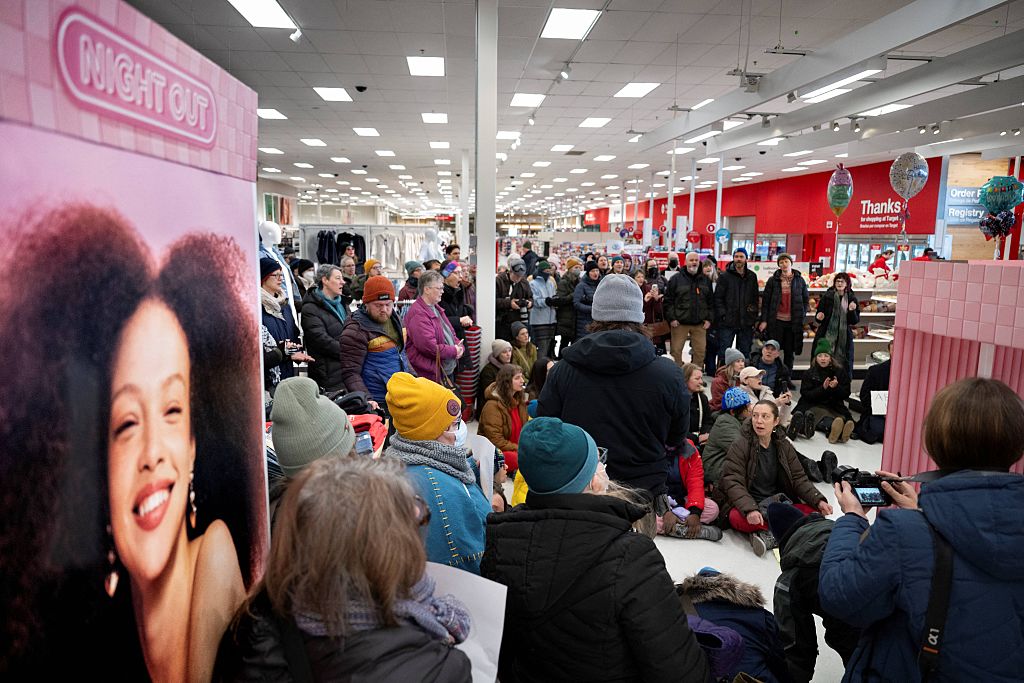
If Target thought its problems and the 13-month boycott were over, it was sadly mistaken. Sorry to that man, Target CEO Michael Fiddelke and his shareholders, but y’all ain’t out of the woods yet.
Pastor Jamal Bryant’s Target Fast, an effort that mobilized clergy and folded into aspects of the national boycott movement, has ended. News that caused unnecessary confusion, including Bryant’s claim that Target met some demands.
To be clear, Target has conceded nothing. It has changed nothing concerning its DEI policy or collaboration with ICE.
Bryant, along with former Ohio State Sen. Nina Turner and activist Tamika Mallory, has led one of two Target boycott contingents. Another group based in Minneapolis, Target’s corporate headquarters, is led by Attorney Nekima Levy Armstrong, CAIR-Minnesota Executive Director Jaylani Hussein, and Black Lives Matter Minnesota co-founder Monique Cullars-Doty.
While Bryant’s Target Fast has ended, the two boycott groups have said they have no intention of giving up. And neither do thousands of former shoppers like myself who are not going back.
My family has shopped at Target since the mid-90s, when I was in middle school. I remember one trip, my mom bought me the cutest baby doll T with a ladybug on it.
Target was an improvement over K-MART. It was an equalizer, allowing even those of us who couldn’t afford the latest fashions to feel good about having something nice to wear.
When I became a mom, Target was my go-to for school supplies and clothes. I used to joke with my daughter about how Cat Jack needed to make adult clothing. It would’ve been a needed improvement over the trad wife collection Target started trying to push on us.
Over the past year, Target has decided it’s worth throwing away decades of loyal consumers. Fidelke, a 23-year Target veteran who served alongside the prior CEO, comes from the same group of decision-makers that abandoned equity commitments and our communities.
His leadership already shows how unconcerned Target is about any of us. Target wants to return to a status quo we are no longer invested in maintaining.
As I wrote last summer, economic boycotts have a long history of bringing power to account. Raising our voices and withholding our resources have broken economic systems and shifted policies in this country at multiple points.
In an open letter to Fiddelke, Minneapolis leaders made it clear that people would not let up on Target’s neck.
“Across the country, consumers, organizers, and community leaders remain committed to holding corporations accountable when their public commitments to equity are abandoned,” read the letter. “If Target continues to ignore the concerns raised by this boycott and refuses to engage directly with the leaders who initiated it, the movement will only grow stronger and more organized in the months ahead.”
Mallory shared a statement saying accountability demands for Target and other corporations continue.
“I do not believe that any one group can call off a grassroots-led boycott,” she said. “And I personally will not be returning to Target.”
An Instagram post from Boycott Target DC called out Target’s “capitulation to white supremacy.” According to the group, Target’s leadership has said it will never publicly apologize.
The majority of the white C-suite, including Fiddelke, doesn’t think it did anything wrong. That’s fine. But I don’t go where I’m not wanted or respected.
And I can always order my cool swag or cute Black girl magic stationery directly from the creators. There are better options for clothes anyway.
Target leadership has only itself to blame for the consumer boycott
Days after the new regime took over, Target disappointed many of its most loyal customers in the rush to pledge fealty to white supremacy. The retail giant gaslit America by claiming that data and other insights drove its decision to end its DEI policies.
They probably used the same whack Chat GPT prompts as DOGE agents responsible for the devastating purge of everything not primarily focused on white men at the federal level.
In an internal memo, Target’s chief community impact and equity officer all but admitted that the move was intended to appease the Trump administration. The company claimed it was “staying in step with the evolving external landscape, now and in the future.”
Target, you could’ve just sat in the corner, chewed your food, and reaped the benefits of decades of customer loyalty and support for diverse creators. But no, you just had to be seen.
Y’all was too busy worrying about the Nazis not sneaking in your store anymore for pride gear, or gender affirming skin care. Target was not ready for the multi-billion-dollar FAFO lesson it received in 2025.
During a press conference in front of Target’s Minneapolis headquarters, Hussein reminded people that Target has caused more harm than just broken DEI promises. He explained how Target supported ICE during “one of the worst attacks” on communities across the Twin Cities. A sentiment echoed by Boycott Target DC.
“It allowed ICE not only to roam in their parking lots, but it also allowed for its employees to be taken out of the front doors of Target Corporation and Target Company,” Hussein said. “Target became the center in the fight against the fight for corporations to respect the Fourth Amendment and to protect their employees and their customers. And Target chose to stand with Bovino.”
Despite its alleged belonging strategy rooted in “our communities,” Target leadership stood by as ICE desecrated a once joyful place and the people who serve us. Footage in January showed Target standing by and doing nothing, like a Charlottesville tiki torch stooge, when a young employee was snatched up and violated by ICE thugs.
No amount of goodwill PR tour can undo the image of Bovino and his storm troopers marching through a Target at the height of the Twin Cities occupation.
Target made a choice. We need to do the same. I’m not supporting a company that struggles to stand firm on basic things like not murdering people and keeping their employees and community safe.
Sure, there are individual organizations and communities that have benefited from Target’s “goodwill.” But letting shoppers award points in a retail Hunger Games to local groups doesn’t erase the many ways corporate “partners” fail the communities that sustain them.
The communities that make them. The communities that serve them with their time and talent.
And honestly, Target’s new CEO’s dismissal of the boycott’s impact could lead to an even bigger drop in sales. So it’s gonna take a lot more than a makeover and vibes to turn around Target’s multi-billion-dollar dance with the devil.
Economic boycotts require organized communities and sustained sacrifice
Target is out here catching more strays than union busters Starbucks and Amazon. The once-favorite retailer of many has become a poster child for the modern era of economic boycotts.
Corporate accountability amid resurging white supremacist domination requires an understanding of ecosystems and how these companies move and operate. It’s industry-wide collusion to suppress our communities.
It’s wage theft, the spying and selling of our information and data centers messing with our water and energy. It’s in the locking up lotion and Black hair care products, while they lie about alleged organized retail theft.
These people flipping through earnings reports in their board meetings think they can ride us out.
The sooner we all accept that capitalist greed and exploitation are the root of so much of the evils we experience, the better off we will be.
Many of us are quick to quote Frederick Douglass: “Power concedes nothing without demand.” But few truly grapple with the moral clarity, physical clarity, and outrage Douglass wove throughout his remarks, delivered eight years before emancipation.
It’s the same clarity and determination on display in Du Bois’s discussion of enslaved Black people’s resistance, as the first and longest-sustained general strike. Boycotts and economic accountability tools are necessary to break down systems that oppress us and profit at our expense.
Appealing to the moral clarity and goodwill of people, getting rich while people are maimed, murdered, and missing will get us nowhere. But hitting them pockets speaks volumes.
Wednesday’s confusion in many ways serves as a point of clarification. It is a moment of deep discernment about how we show up and what we are willing to lose as we fight to dismantle these oppressive systems.
To boycott or not boycott is up to each individual and their households. Boycotts are one of many tools available to us.
And a successful boycott requires community, strategy, and sustained organization. The Montgomery Bus Boycott didn’t just happen through osmosis.
It took determination and dedication, along with people stepping up to help fill the gaps.
Boycotting is also more than just following a list in a viral post and virtue-signaling about which trash corporation you do or don’t support. There is no perfect consumer under capitalism.
But we all have choices in how we can reduce harms and move our dollars to businesses aligned with our values.
Instead of posting about the boycott wars or who did what wrong, consider sharing information and resources to help people find alternatives. Mutual aid, combined with some political education, can go a long way toward our generational struggle for justice.
SEE ALSO:
Montgomery Bus Boycott Offers Lessons In The Power Of Organized People
States Must Hold Line Against Trump’s Election Subversion
‘Riot To Repair’ Project Provides Platform For Community Storytelling
Target Chose White Supremacy Over Customer Loyalty was originally published on newsone.com